
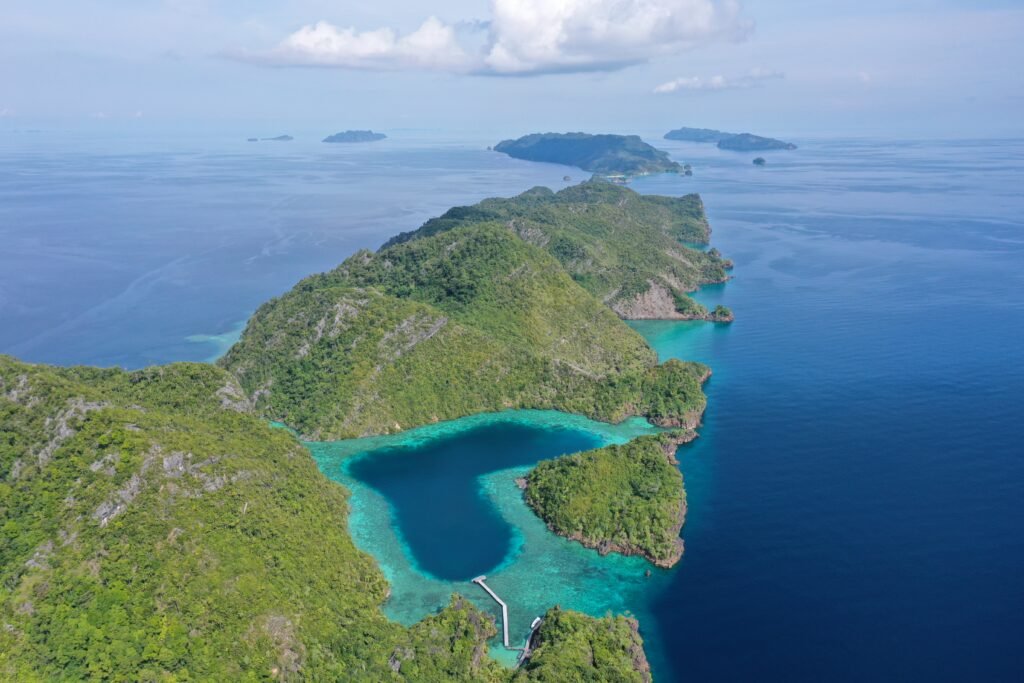
Located off the northwest tip of Papua, Indonesia, Raja Ampat is often called the last paradise on Earth. Nestled within the heart of the Coral Triangle, this archipelago is home to one of the richest marine biodiversities on the planet. Its crystal-clear waters shelter over 75% of the world’s known coral species, around 1,500 species of fish, and countless marine creatures, from majestic manta rays to tiny pygmy seahorses. The coral reefs here are not only breathtaking but also vital for global marine ecosystems, acting as nurseries for fish and natural defenses against coastal erosion. Because of this immense ecological value, Raja Ampat has been designated as a marine conservation area, emphasizing the need to protect this underwater treasure for future generations.
While modern conservation practices are often credited for preserving Raja Ampat’s environment, sustainability here is not a new concept. For centuries, the local Papuan communities have lived in harmony with nature through a traditional ecological practice called Sasi. This customary law governs the use of natural resources both from the sea and the forest, to ensure balance and renewal. Sasi dictates periods when certain areas or species are off-limits for harvesting, allowing ecosystems to regenerate naturally. Thanks to this ancestral wisdom, Raja Ampat’s lands and waters remain teeming with life, showcasing the success of indigenous stewardship long before global environmental movements emerged.
In Raja Ampat, the implementation of Sasi is a deeply spiritual and communal event. The practice begins with a traditional ceremony led by village elders and local religious leaders. During this ritual, sacred symbols often woven palm leaves or coconut fronds are placed along the coast or forest to mark the boundaries of the protected area. Once Sasi is declared, no one may harvest or disturb the resources within these zones, whether it be fish, shellfish, or forest produce.
The closure period can last for several months or even years, depending on the community’s decision. When the time comes to lift Sasi, another ceremony is held to bless the opening. The event is celebrated with music, dancing, and shared meals, symbolizing gratitude to nature and respect for the balance it provides. Beyond its ecological function, Sasi also strengthens social cohesion, teaching values of patience, respect, and collective responsibility.
Raja Ampat’s beauty is both fragile and sacred. The centuries-old practice of Sasi stands as a powerful reminder that true sustainability begins with respect for nature, culture, and community. As visitors, travelers play a vital role in preserving this paradise. When exploring Raja Ampat, it is essential to travel responsibly:
- Follow local regulations and respect Sasi zones by not fishing, touching corals, or collecting marine life.
- Support local communities by choosing homestays, guides, and businesses run by residents.
- Minimize waste, especially plastic, and participate in beach or reef clean-ups when possible.
- Learn about and honor local traditions, understanding that every ritual and rule carries deep meaning.
By embracing these principles, travelers not only enjoy Raja Ampat’s beauty but also help ensure that its reefs, forests, and culture continue to thrive, just as the wisdom of Sasi has protected them.
Ready to experience the magic of Raja Ampat? Let us handle all the details from transport, accommodation to tours and activities. So, you can simply relax and enjoy an unforgettable journey in this remote paradise.