
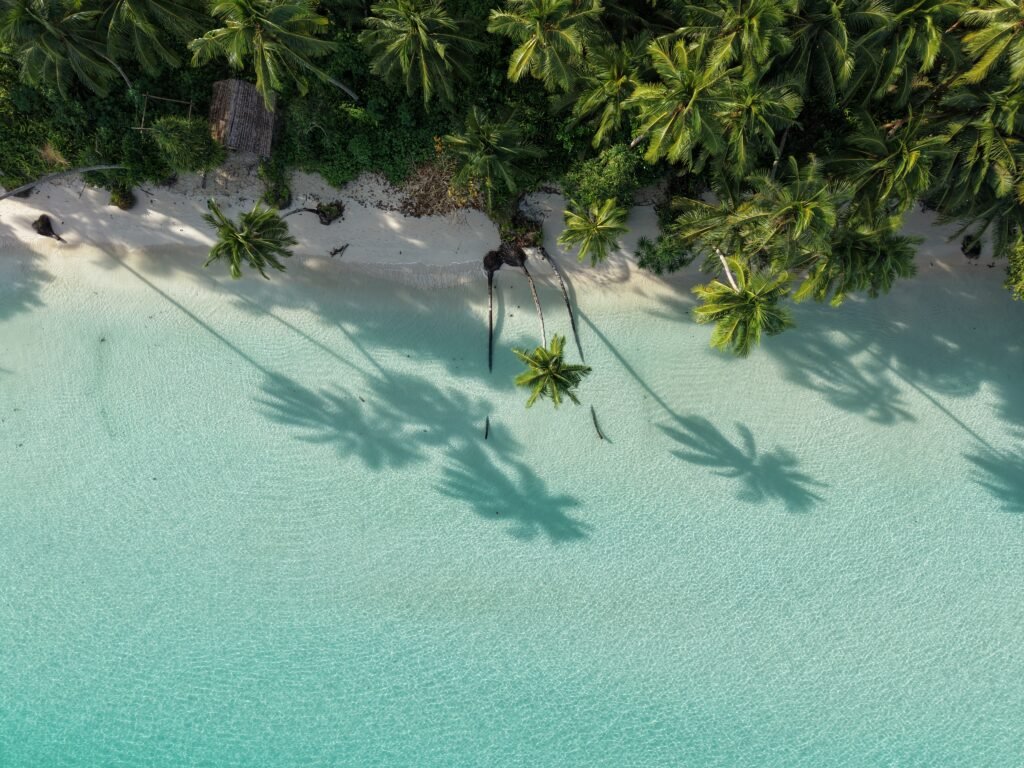
When most travelers think about Indonesia, Bali is usually the first destination that comes to mind. But far beyond Bali’s busy beach clubs and crowded tourist hotspots lies one of Indonesia’s best-kept secrets: the Kei Islands.
Located in the remote Maluku region of eastern Indonesia, the Kei Islands offer powdery white sand beaches, crystal clear waters, peaceful fishing villages, and authentic island life that feels untouched by mass tourism. For travelers looking for a quieter and more authentic tropical escape, Kei is quickly becoming one of the most exciting destinations in Indonesia beyond Bali.
Here is the list of things to do in the Kei Islands:
1.Experience the Natural Sea Swimming Pool of Madwaer Beach
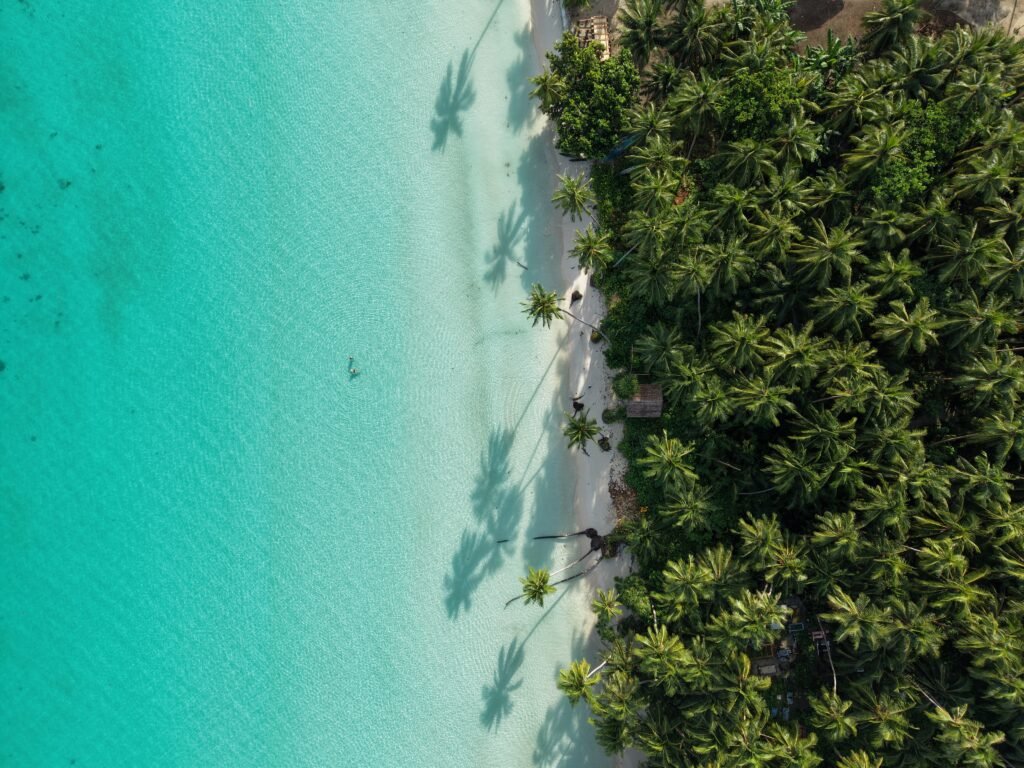
Madwaer beach is the kind of place that feels unreal until you see it with your own eyes. The beach is covered in soft white sand that feels almost like powder beneath your feet. The water is crystal-clear turquoise, so transparent that you can see the sandy seabed from the shoreline.
What makes this beach truly special is the absence of rocks or coral on the sea floor. The bottom is made entirely of smooth, fine sand, making the ocean feel like a giant natural swimming pool. You can walk far into the water and still feel the soft sand under your feet the whole time.
There are almost no waves at all. The surface of the sea stays calm and glassy, with only gentle ripples moving slowly with the wind. Because of how peaceful the water is, swimming here feels incredibly relaxing, almost like floating in a private lagoon.
The atmosphere is quiet and untouched, with nothing but the sound of the breeze and the calm sea around you. As the sunlight reflects on the turquoise water, the entire beach looks like a postcard brought to life. It is not only beautiful to look at, but also the kind of place that makes you feel completely at peace.
2. Ngurbloat beach, Home to Some of Asia’s Softest White Sand
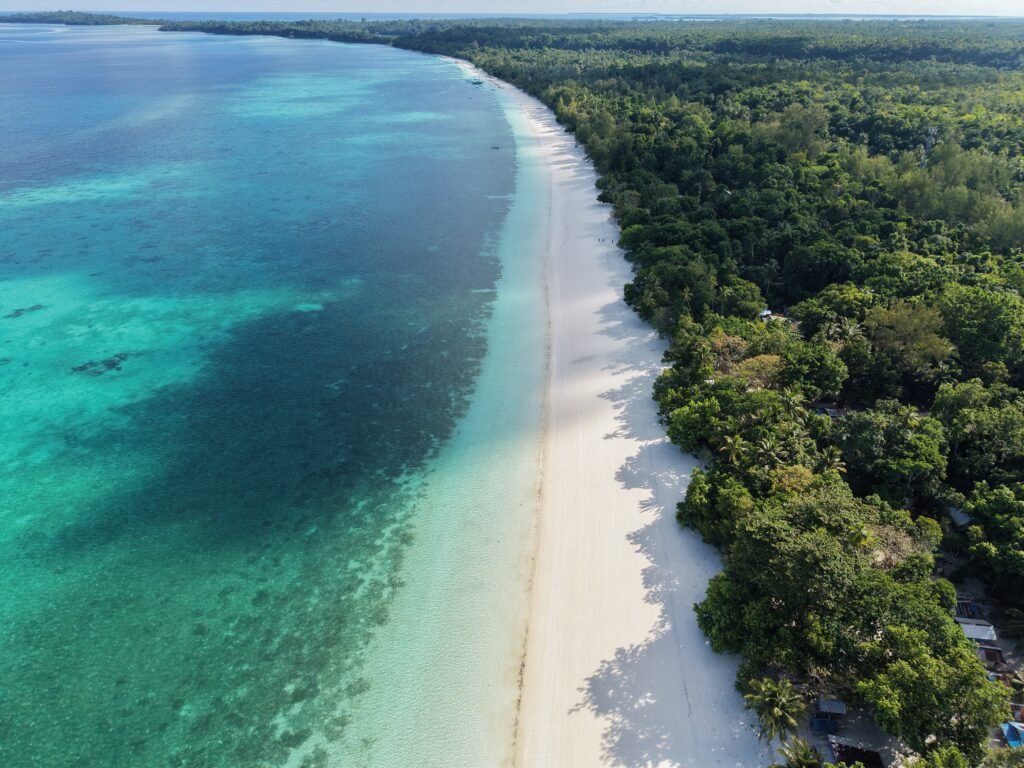
The first thing most travelers notice when arriving at Ngurbloat Beach is not the color of the water, it is the sand itself. Soft, bright white, and incredibly fine, the sand almost feels unreal beneath your feet. Locals in the Kei Islands proudly describe it as some of the softest sand in Asia, a reputation that has even been associated with mentions by National Geographic. Walking barefoot here feels more like stepping on powder than ordinary beach sand.
Stretching for several kilometers along the coast of Kei Kecil, Ngurbloat has a peaceful atmosphere that feels very different from the busy beaches of Bali. There are no loud beach clubs or heavy traffic nearby. Instead, visitors are greeted by calm turquoise water, swaying coconut trees, and the sound of small fishing boats moving slowly across the horizon.
Early in the morning, the beach feels almost untouched. Local fishermen prepare their boats while the rising sun reflects softly across the shallow sea. During the afternoon, the water becomes perfectly clear and calm, ideal for swimming or simply floating while looking out across the endless coastline. In the evening, there are some locals going to the water with their flashlights trying to find some fish for meals and to sell them.
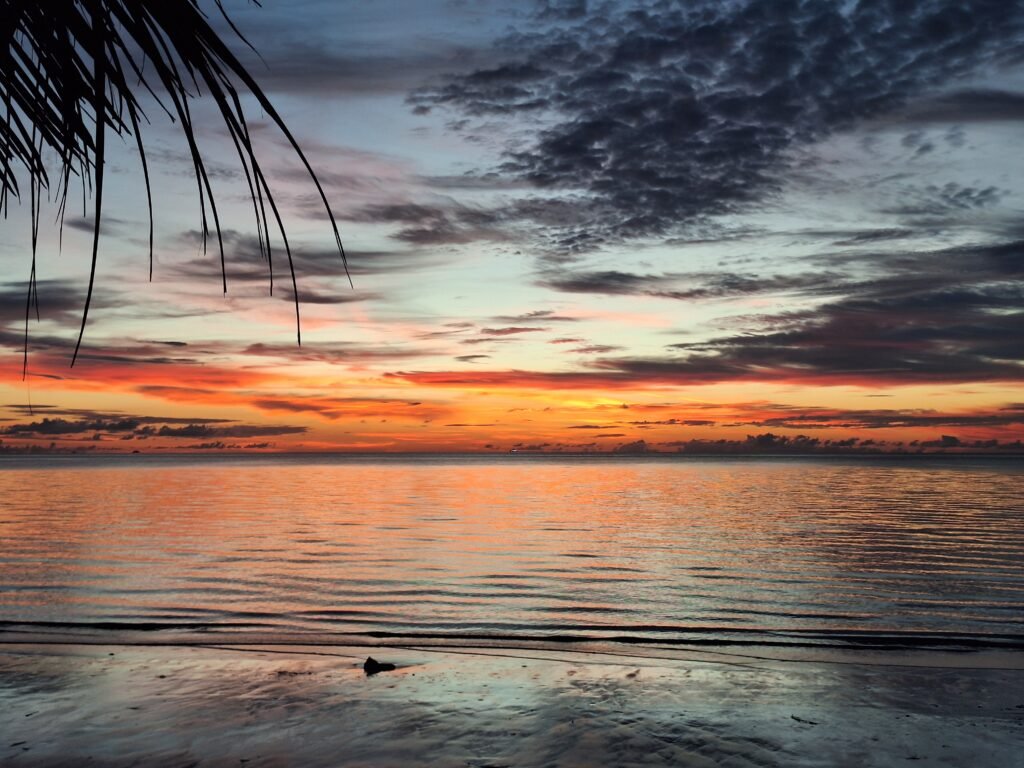
One of the most unforgettable moments at Ngurbloat happens near sunset. As the light begins to soften, the entire beach turns golden, and long shadows stretch across the white sand. Unlike many tropical destinations where beaches become crowded toward evening, Ngurbloat often remains remarkably quiet, creating a sense of isolation that is becoming increasingly rare in Southeast Asia.
3. Explore Hidden Lagoons of Bair Island
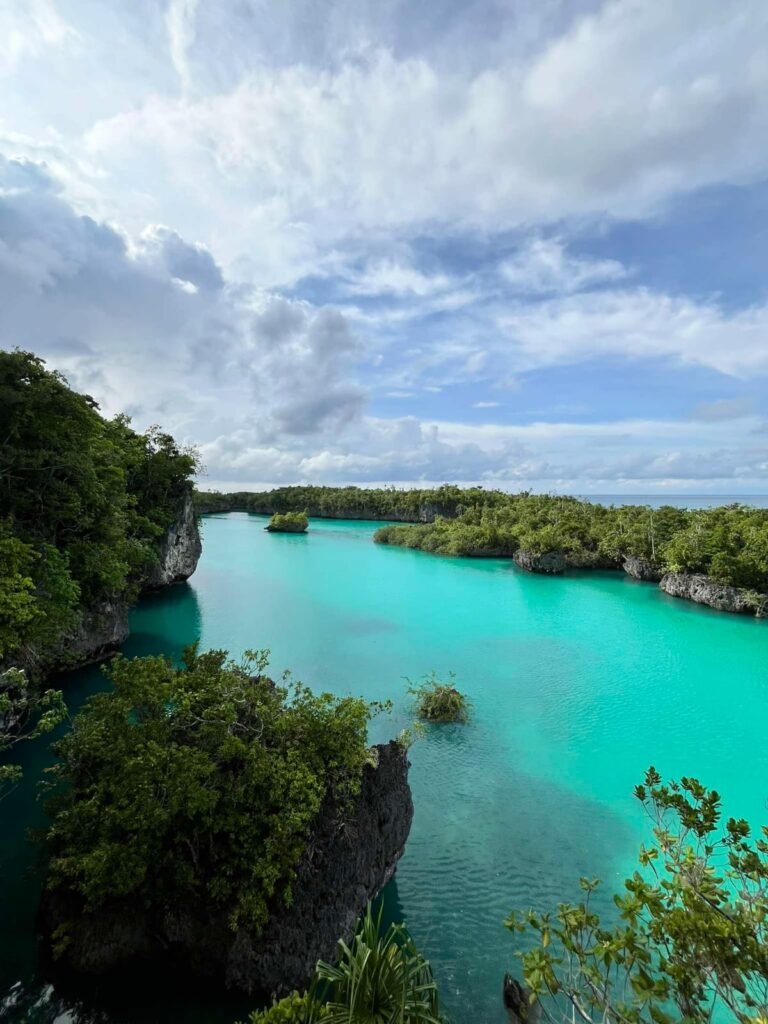
Often called the “Raja Ampat of the Kei Islands,” Bair Island is one of the most spectacular natural attractions in the region. Surrounded by dramatic limestone cliffs, turquoise lagoons, and crystal-clear waters, Bair Island offers a completely different landscape from the white sand beaches found across the Kei Islands.
The journey itself is already part of the experience. Small local boats slowly glide across calm turquoise waters before entering narrow passages surrounded by towering limestone cliffs covered in dense tropical vegetation. As the boat moves deeper into the hidden lagoons, the water changes color constantly, from deep blue to bright emerald and transparent turquoise depending on the sunlight and depth below.
Unlike more famous destinations in Indonesia, Bair Island remains remarkably quiet. There are no large resorts, crowded docks, or busy tour groups. Often, the only sounds are the movement of the water against the cliffs, birds flying overhead, and the distant engine of a fisherman’s boat disappearing into another hidden cove.
4. Discover the Underground Waters of Hawang Cave
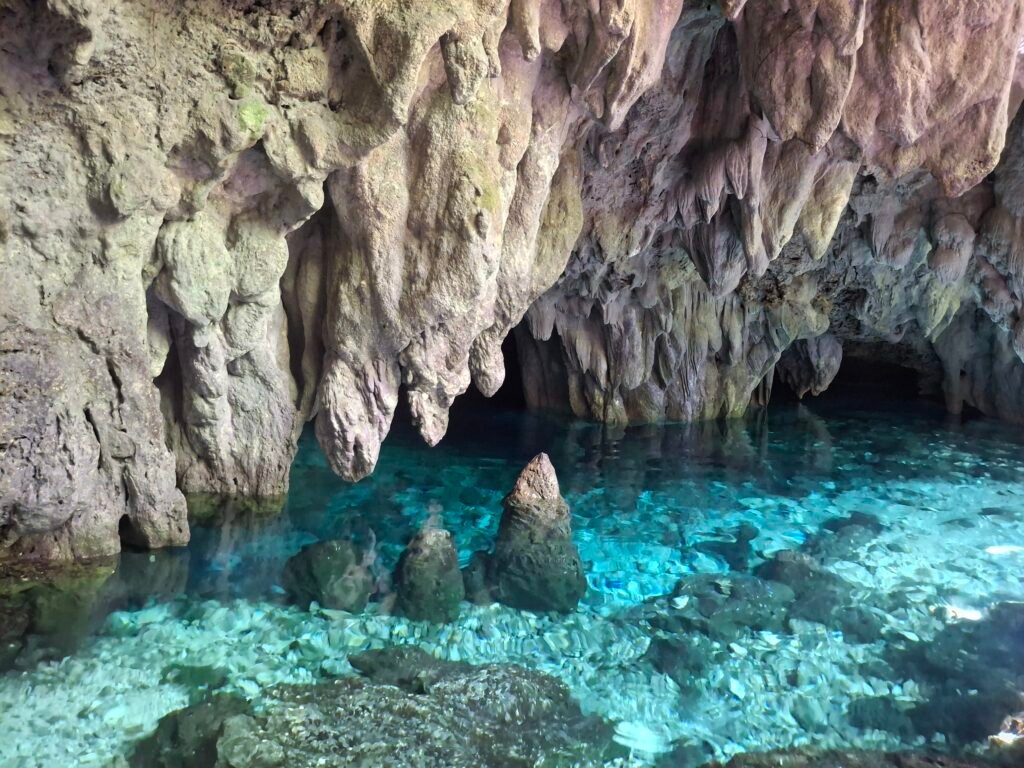
Hidden among limestone hills and tropical forest on Kei Kecil, Hawang Cave feels more like a secret natural sanctuary than a typical tourist attraction. Surrounded by trees and quiet village roads, the entrance itself appears modest at first, but stepping closer reveals one of the most beautiful freshwater pools in the Kei Islands.
Inside the cave, sunlight filters through openings in the limestone ceiling and reflects across incredibly clear turquoise water below. The water is so transparent that submerged rocks and deep underwater formations remain visible even several meters beneath the surface. Depending on the light, the colors shift between emerald green, deep blue, and crystal clear turquoise throughout the day.
According to local Kei traditions, Hawang Cave is more than just a natural attraction. The cave has long been associated with ancestral stories and spiritual beliefs passed down through generations. One of the most well-known local legends tells the story of two dogs that disappeared into the cave system, symbolizing a mysterious connection between nearby villages and the underground waters beneath the islands. Even today, many local people still consider the cave spiritually significant and treat the area with great respect, believing it represents the close relationship between nature, ancestors, and daily life in the Kei Islands.
5. Walk Across the Ocean at Ngurtavur Sandbank
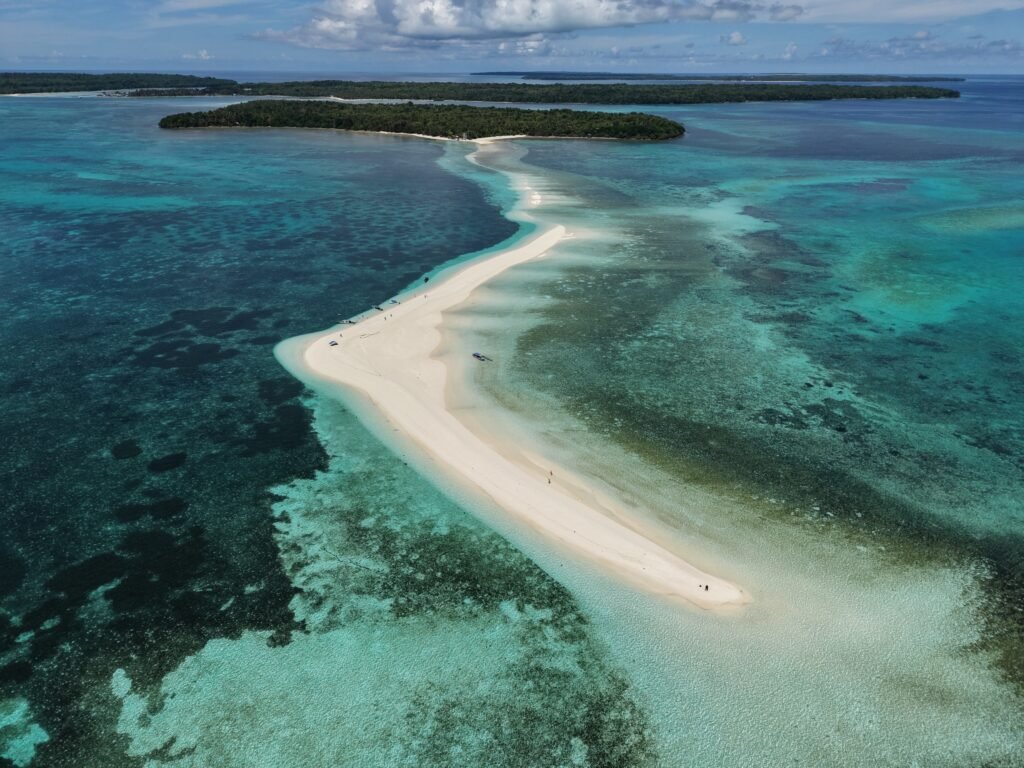
Ngurtavur is famous for its long strip of white sand that appears in the middle of the turquoise sea, creating the incredible feeling of walking across the ocean itself. Located on Warbal Island in the Kei Islands, the sandbank stretches for nearly 2 kilometers during low tide, surrounded by crystal-clear shallow water on both sides. Arriving here by boat already feels like entering another world. As the sandbank slowly appears in the distance, the contrast between the bright white sand and the endless shades of blue ocean becomes almost unreal.
Ngurtavur is also known as an important resting area for migratory pelicans and seabirds traveling across the Asia-Pacific region. At certain times of the year, visitors may see flocks of birds resting peacefully along the sandbank, adding to the untouched and remote atmosphere of the area.
6. Discover the Pearl Farms of the Kei Islands
Surrounded by calm seas, remote islands, and exceptionally clear waters, the Kei Islands have quietly become part of Indonesia’s pearl-producing region. Visiting a pearl farm here offers travelers a chance to experience a side of island life that feels both traditional and deeply connected to the ocean.
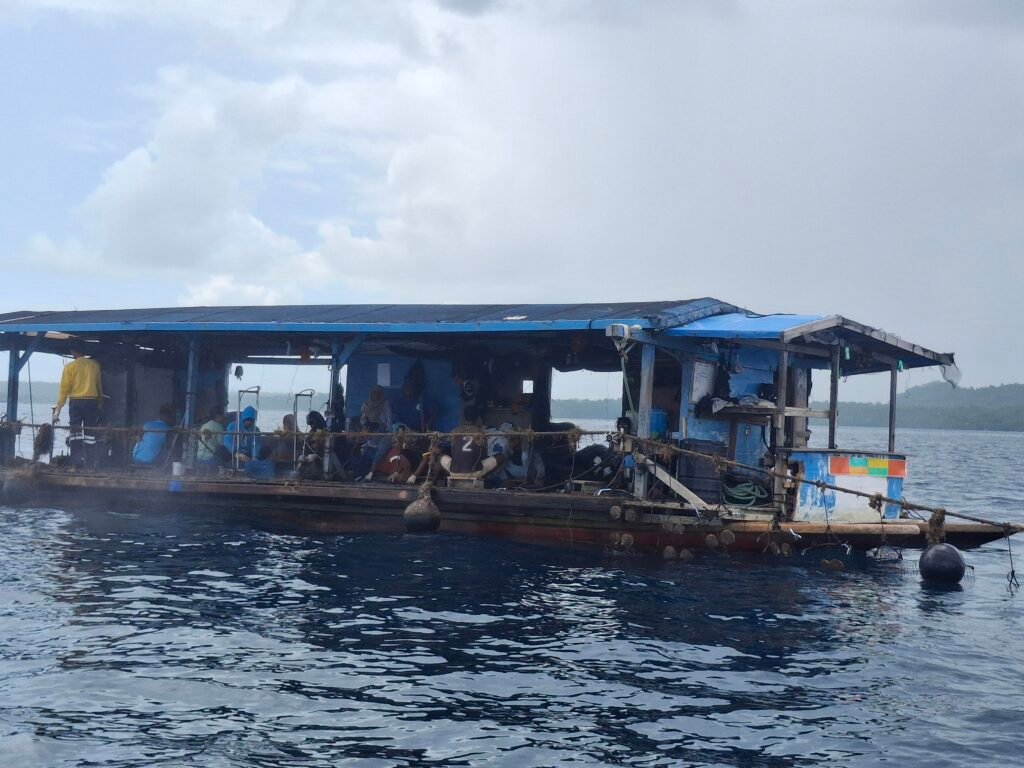
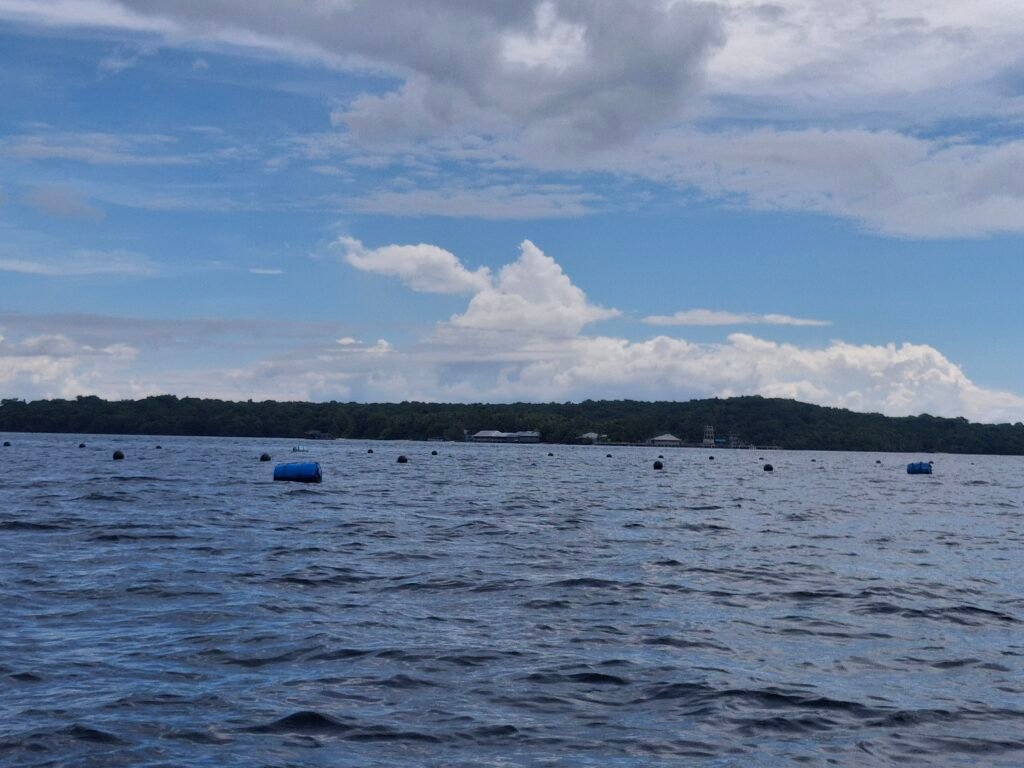
Reaching the pearl farming areas often involves traveling by small boat across calm waters where floating oyster platforms appear in the distance beneath wide tropical skies. Standing on the floating platforms, visitors can see how pearl oysters are carefully cultivated over several years in the clean waters surrounding the islands. Local workers slowly lift oyster baskets from beneath the sea while explaining the delicate process behind South Sea pearl cultivation. The calm protected waters around the Kei Islands create ideal conditions for pearl cultivation, similar to other world-famous pearl-producing regions across the Asia-Pacific.
Below in the picture is the sample of a pearl that has been cultivated for approximately 4 months.
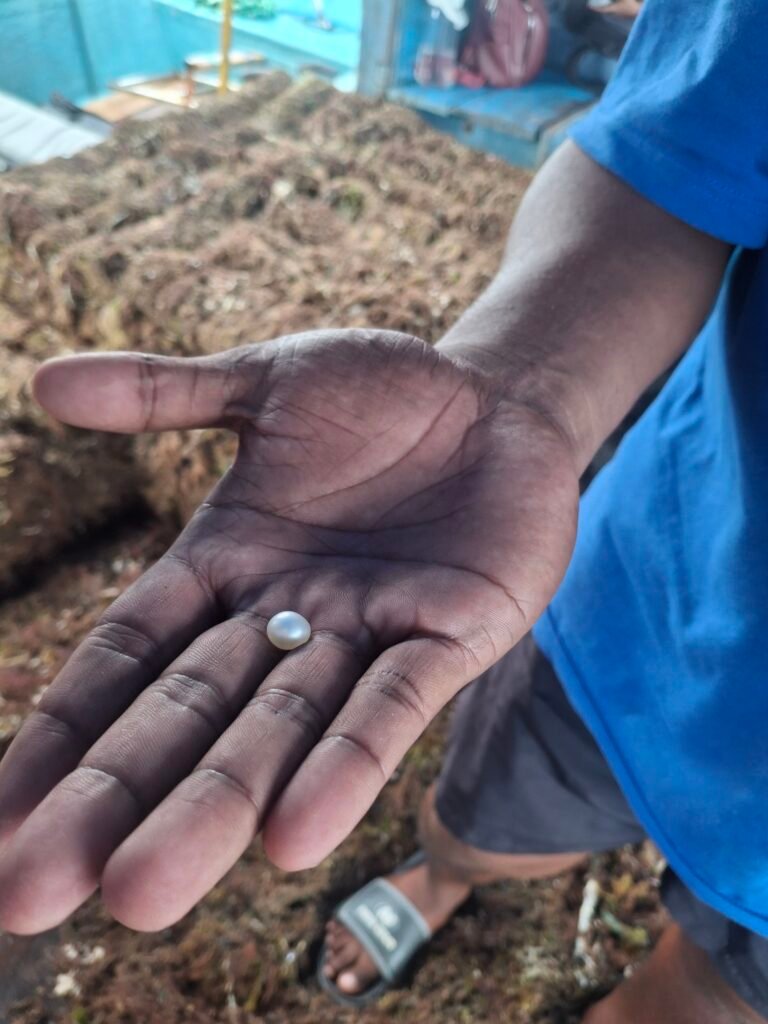
As the sun reflects across the still water and oyster platforms drift quietly in the distance, visiting the pearl farms becomes less about luxury jewelry and more about understanding how life in the Kei Islands continues to depend on the ocean in ways that have changed very little over generations
7. Evu Waterfall, the Water of Life
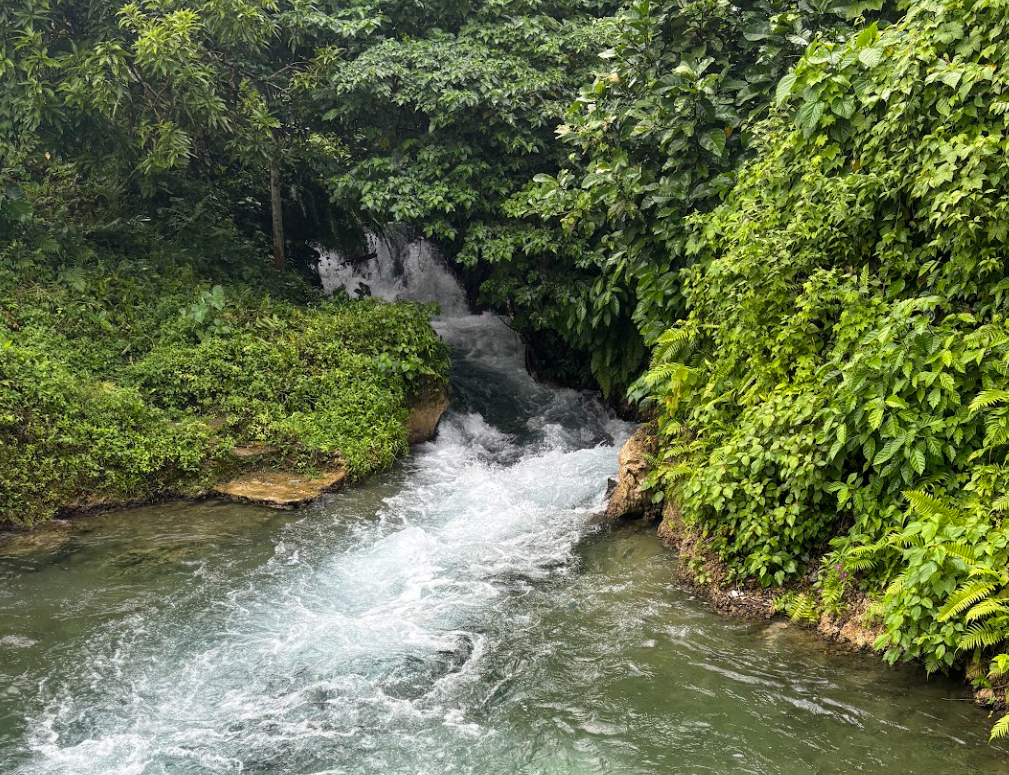
Air Terjun Evu offers a completely different atmosphere from the beaches and coastal lagoons of the Kei Islands. The journey to the spring and waterfall passes through quiet local villages, tropical vegetation, and narrow countryside roads where daily life still moves slowly and traditionally.
Unlike the dramatic waterfalls found in other parts of Indonesia, Air Terjun Evu is known for its peaceful freshwater pools and incredibly clear spring water flowing naturally through limestone formations. The water here feels cold, fresh, and incredibly clean.
The atmosphere around Evu feels calm and untouched. Large tropical trees provide shade over the pools while the sound of flowing water echoes softly through the surrounding forest. Local families often come here to swim, relax, and escape the afternoon heat, giving visitors a glimpse into everyday life in the Kei Islands beyond tourism. This waterfall is the main source of clean water supply in Kei kecil, distributed across the region through local water system (PDAM). Local people often describe Evu as the “water of life,” reflecting how essential the spring has been for generations living across the islands.
8. Visit Traditional Seaweed Farm
Hoat Sorbay Bay has become one of the important seaweed cultivation areas in Kei Kecil, where many local families depend on the ocean for their livelihood. Early in the morning, farmers can often be seen walking through the shallow water, carefully checking ropes, cleaning seaweed, or preparing fresh seedlings.
What makes the experience especially interesting is realizing that these quiet coastal farms are connected to global industries far beyond the islands themselves. The red seaweed cultivated here, particularly Eucheuma varieties, is commonly processed into carrageenan, a natural ingredient widely used in food, cosmetics, toothpaste, shampoo, and skincare products around the world. While visitors standing along the quiet shores of Kei might only see rows of floating seaweed beneath the water, these farms are actually part of a much larger global supply chain connected to everyday products used around the world.
Unlike many tourist attractions in Bali, the seaweed farms of Kei are not created for tourism. They are simply part of the living landscape of the islands where nature, local livelihoods, and global industries quietly meet along the shores of eastern Indonesia.
9. Experience the Meti Kei Festival
Among all the experiences in the Kei Islands, nothing feels more unique or deeply connected to local culture than the Meti Kei Festival. Held during a rare natural phenomenon known locally as “meti,” the festival takes place when the sea recedes dramatically, exposing vast stretches of white sand, coral reefs, and shallow seabeds that are normally hidden beneath the ocean. In some areas, the water retreats so far that people can walk between islands that are usually separated by the sea.
For local communities, Meti Kei is much more than a tourism event. It is a celebration of nature, ancestral traditions, and the centuries-old relationship between the Kei people and the sea. The festival itself was created around this extraordinary tidal phenomenon, which usually occurs between October and November when the lowest tides appear across the islands.
During the festival, villages across the islands become alive with cultural performances, music, traditional ceremonies, and community gatherings. One of the most iconic moments is the traditional “Wer Warat” communal fishing ritual, where local villagers enter the shallow sea together carrying long coconut-leaf ropes to guide fish across the exposed seabed. Watching hundreds of people moving slowly together across the retreating ocean feels both cultural and deeply spiritual.
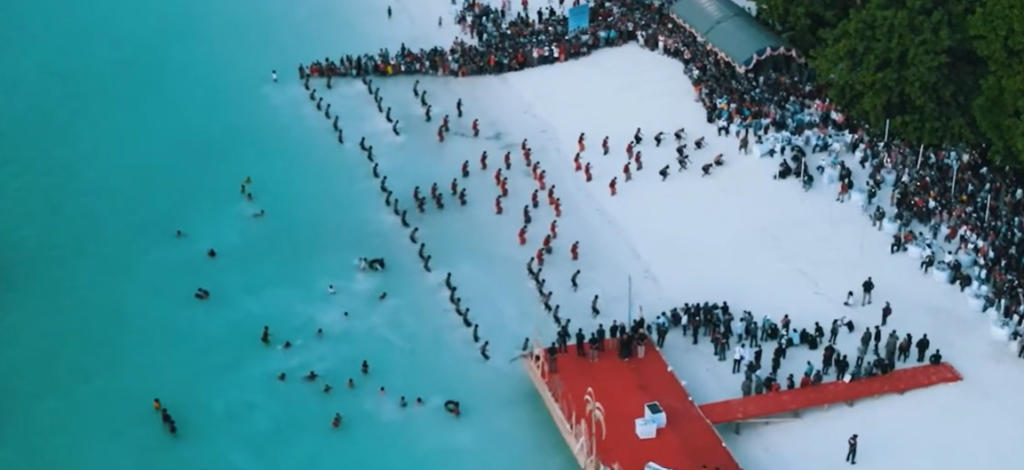
Beyond the cultural performances, the festival also includes canoe and traditional rowing races, beach sports competitions, seafood gatherings, local craft exhibitions, storytelling sessions, traditional music performances, photography and cultural workshops, and community celebrations across coastal villages.
10. Walk Across the Endless Low Tide Beach of Ohoidertawun
Ohoidertawun Beach is one of the most unique coastal experiences in the Kei Islands. During low tide, the sea retreats dramatically, revealing an enormous stretch of white sand that can extend up to 2 kilometers from the shoreline.
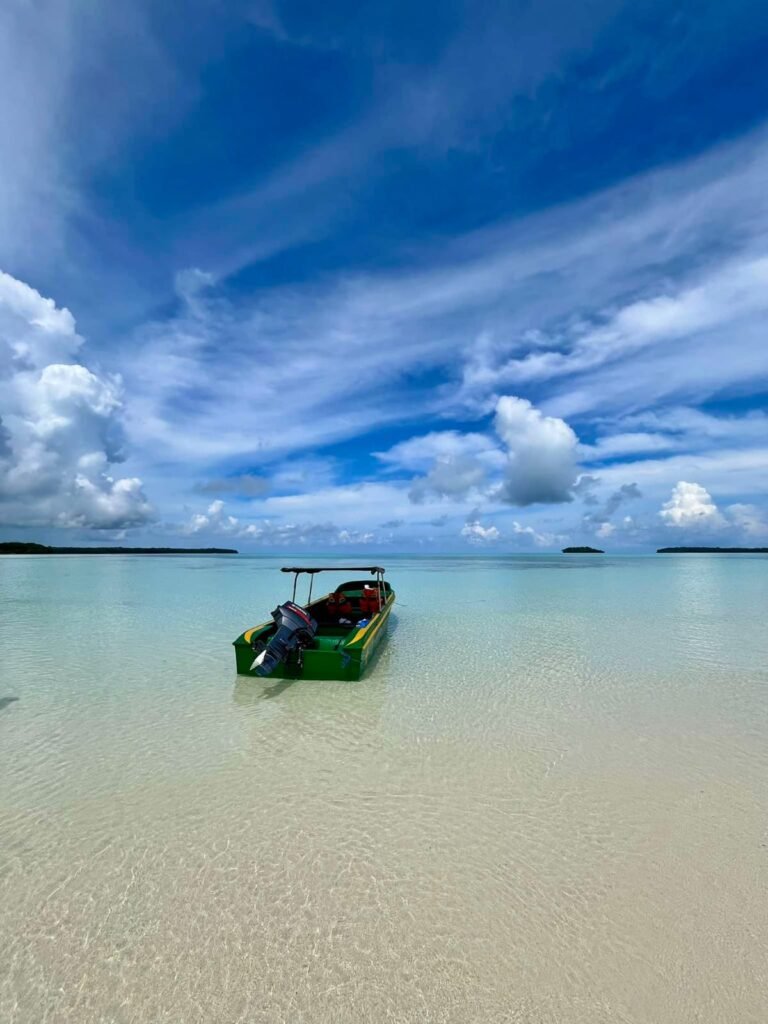
The shallow crystal clear water and endless sand flats create a surreal landscape that feels untouched. You can walk far into the ocean while the water remains only ankle-deep, making it one of the most photogenic beaches in eastern Indonesia. Beyond the beach itself, Ohoidertawun is also known for its prehistoric rock paintings hidden along nearby coastal cliffs. These ancient paintings are believed to date back thousands of years and offer a fascinating glimpse into the early history and culture of the Kei Islands.
11. Visit a Local Coffee Farm in the Kei Islands
While the Kei Islands are mostly known for white sand beaches and turquoise waters, the quieter inland areas reveal another side of island life that many travelers never expect to see. Small local coffee farms scattered across the countryside offer a chance to experience the slower agricultural rhythm of the islands beyond the coast.
The journey to the farms passes through peaceful villages, tropical vegetation, and narrow roads lined with coconut trees and small family gardens. Unlike large commercial plantations found elsewhere in Indonesia, coffee farming in Kei feels personal and deeply connected to local family life.
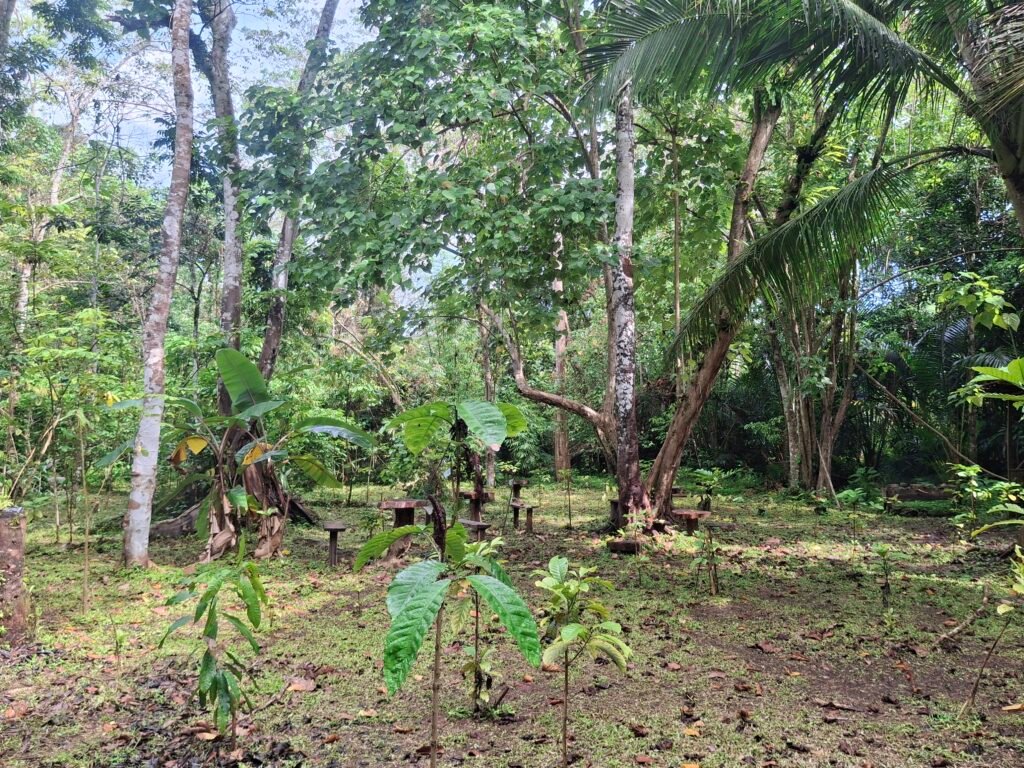
What makes the experience even more meaningful is that visitors have the opportunity to plant their own coffee tree during the visit. After planting the seedling, guests can place a small name tag with their name and country, leaving a personal connection behind in the islands. Many travelers love the idea of returning to Kei one day and seeing how their coffee tree has grown over time, a simple but memorable reminder of their journey through eastern Indonesia.
Depending on the season, travelers may watch local farmers sorting coffee cherries, drying beans under the tropical sun, roasting them manually over fire, and grinding the coffee before brewing it fresh on site.
12. Discover the Beauty of Ngur Vat Namsir Beach
Hidden away from the more visited parts of the Kei Islands, Ngur Vat Namsir Beach feels like one of those rare places that travelers accidentally discover and never forget. Quiet, remote, and surrounded by untouched coastal scenery.
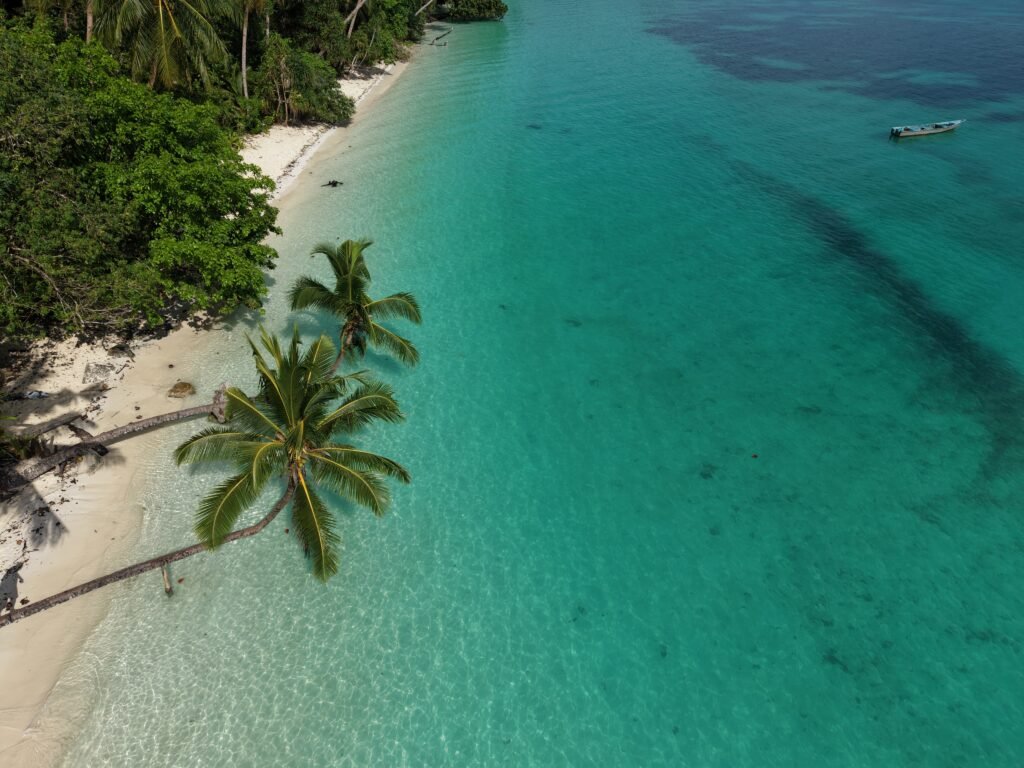
The journey to Ngur Vat Namsir itself is already part of the experience. Passing through small villages, coconut groves, and quiet coastal roads, visitors slowly leave behind the busier areas of Kei and enter a landscape that feels increasingly peaceful and isolated.
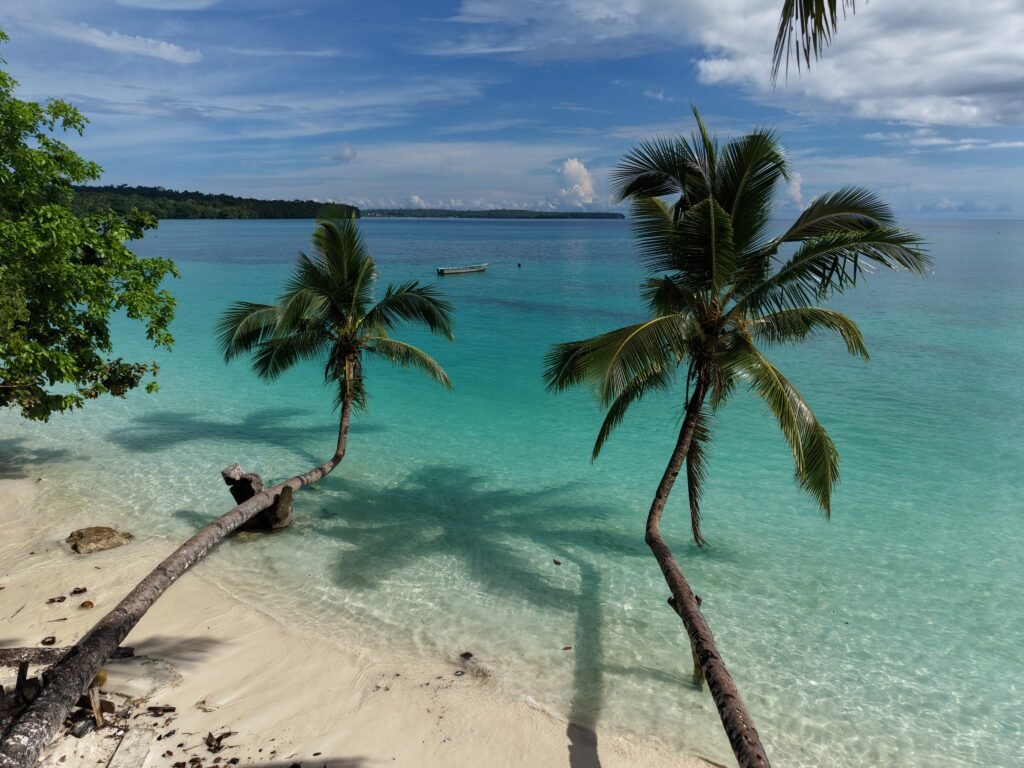
One of the most unique features of Ngur Vat Namsir is its distinctive coconut trees growing along the coastline. Many of the trees lean dramatically toward the sea, shaped over time by strong coastal winds and the island environment. Some curve almost horizontally above the beach, creating natural tropical frames over the white sand and turquoise water. These unusual coconut trees have become one of the most photographed sights in the area and give the beach a character that feels both wild and cinematic.
Should you find yourself drawn to the natural beauty of the Kei Islands, you will soon notice that reaching its more remote beaches and lagoons often requires careful planning and local familiarity. With the right guidance, however, the experience becomes significantly more seamless, allowing you to focus entirely on the journey and the landscapes themselves. If you are considering a visit to this part of Eastern Indonesia, Remasia Travel is available to assist in arranging tailored travel experiences that ensure a smooth and well-prepared exploration of these remote destinations.